How to design a low maintenance planting scheme for UK gardens
If you want a garden that looks considered without demanding every spare weekend, you are in the right place. Designing a low maintenance planting scheme for UK gardens is less about "no work at all" and more about making smart choices from the start: the right plants, the right spacing, the right soil prep, and a layout that does not punish you every time the weather turns. And in the UK, weather does turn. Quickly.
The good news? A low maintenance border can still feel rich, seasonal, and full of life. You do not need a flat, lifeless gravel patch or a garden that looks neglected by August. With a little planning, you can create a planting scheme that copes with damp winters, dry spells, shade from nearby fences or trees, and the usual "I'll tidy that next week" reality we all know too well.
This guide walks you through how it works, what to plant, what to avoid, and how to build a scheme that saves time without looking sparse. You will also find a practical checklist, a comparison table, and a realistic example from a typical UK garden.
- Why low maintenance planting matters
- How the approach works
- Benefits and practical advantages
- Who it is for
- Step-by-step guidance
- Expert tips for better results
- Common mistakes to avoid
- Tools, resources and recommendations
- Law, compliance, standards and best practice
- Options and comparison table
- Case study example
- Practical checklist
- Conclusion
- Frequently asked questions
Why How to design a low maintenance planting scheme for UK gardens Matters
A low maintenance planting scheme matters because most gardens are not cared for like show gardens. They need to cope with school runs, commuting, holidays, wet winters, hard frosts, and the occasional very enthusiastic burst of sunshine that arrives after weeks of drizzle. Truth be told, many gardens fail because they were designed for a perfect summer day, not for everyday life in the UK.
The phrase "low maintenance" can mean different things to different people. For one household, it means no weekly deadheading. For another, it means minimal watering, less pruning, and fewer plants that collapse into a floppy mess by midsummer. The design has to match your actual habits, not your best intentions on a sunny Saturday in April.
That is where planting structure matters. A good scheme reduces routine jobs, keeps weeds down, handles seasonal shifts, and avoids constant replacement planting. It also makes a garden feel calmer. Less cluttered. Less frantic. You notice that more than you think once the garden settles in.
In practical terms, a low maintenance scheme is especially useful for front gardens, family gardens, rental properties, and smaller urban spaces where time is tight and access can be awkward. It is also a sensible option if you want the help of a local gardener or a wider garden maintenance plan to keep things tidy without needing constant intervention.
How How to design a low maintenance planting scheme for UK gardens Works
The basic idea is simple: you design the garden so nature does more of the heavy lifting. That means choosing plants that suit the site, grouping them in ways that reduce competition and weeding, and building in enough ground cover or planting density that bare soil is kept to a minimum.
A low maintenance planting scheme usually works best when it combines four things:
- Right plant, right place. This is the foundation. Shade-loving plants in shade, sun-lovers in sun, moisture-tolerant plants in damp ground.
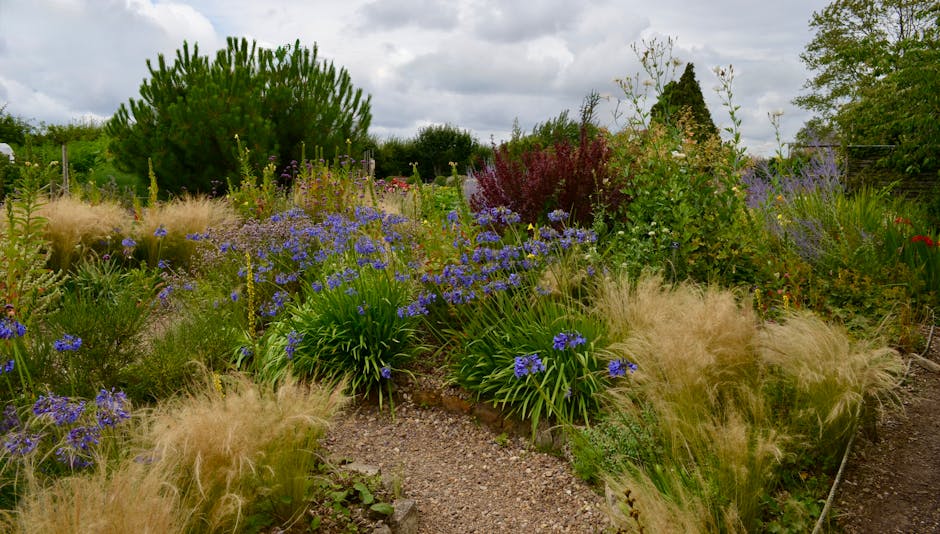
- Layered structure. Trees, shrubs, perennials, grasses, and ground cover work together so the bed is attractive even when one layer is out of season.
- Simple repetition. Repeating a few reliable plants looks better than scattering too many one-offs around the border.
- Low input surfaces. Mulch, edging, and ground cover reduce weeds and moisture loss, which cuts maintenance straight away.
In UK gardens, the climate adds a few extra considerations. Winters can be wet enough to rot things that hate sitting in water. Summers can be dry enough to stress shallow-rooted plants. Exposed coastal or windy sites need stronger choices than sheltered city courtyards. So the scheme needs to be specific, not generic.
A well-designed border also makes future care easier. You can prune in a more predictable way, water less often once plants are established, and avoid the messy patchwork that happens when plants are bought on impulse and stuffed into the nearest gap. We have all seen that garden. It starts with good intentions and ends in a tangle.
Key Benefits and Practical Advantages
A strong low maintenance planting scheme does more than save time. It changes how the whole garden feels and functions.
| Benefit | What it means in practice | Why it matters in UK gardens |
|---|---|---|
| Less weeding | Dense planting and mulch reduce open soil | Moist UK conditions can encourage weeds quickly |
| Lower watering needs | Once established, many plants cope with ordinary rainfall | Useful for summer dry spells and holiday periods |
| Fewer replacements | Choose hardy, long-lived plants suited to the site | Reduces the stop-start feel of a struggling border |
| Better year-round structure | Evergreen shrubs, grasses, and structural plants hold shape in winter | Prevents the garden looking empty for half the year |
| Cleaner, calmer layout | Repeated planting groups create visual order | Small gardens especially benefit from simplicity |
There is also a financial upside. Fewer plant replacements, less irrigation, and less reactive maintenance can all reduce long-term spend. If you are comparing professional help, it may be worth looking at pricing and quotes early, especially if you want the planting scheme installed and then maintained as a package.
Another quiet benefit? The garden tends to become more enjoyable. If a border is not constantly asking for attention, you are more likely to sit in it, notice it, and actually use it. That sounds obvious, but it changes how people feel about their outdoor space.
Who This Is For and When It Makes Sense
This approach makes sense for a lot of UK homeowners, but especially for people who want their garden to look good without becoming a second job.
- Busy households who want a tidy, attractive garden with limited upkeep.
- Older gardeners who want to reduce bending, lifting, and repetitive tasks.
- New homeowners who want a sensible starting point rather than a high-maintenance experiment.
- Rental or second homes where consistent care is harder to arrange.
- Small urban gardens where space is limited and every plant needs to earn its keep.
- Front gardens that should look neat with minimal weekly attention.
It is also a good choice if your garden has a few awkward conditions. Maybe it is north-facing and a bit gloomy. Maybe it has thin, dry soil under a mature tree. Maybe the side return only gets a couple of hours of sun before the neighbour's fence shadows it. Those are not problems to fear. They are design clues.
If you are planning a larger overhaul, the broader services offered under landscape gardening or landscaping can help if hard landscaping, drainage, or layout changes are needed alongside the planting.
Step-by-Step Guidance
Here is the practical route. Not glamorous, maybe. But it works.
1. Start with the site, not the plant list
Before you buy anything, look at the garden properly. Where does the sun land in the morning and late afternoon? Where does water collect after rain? Which areas dry out first? What gets shaded by buildings, fences, and trees?
That simple survey prevents most bad decisions. A drought-tolerant plant in a boggy border will sulk. A moisture-loving plant in baked, sandy soil will struggle. The planting scheme should fit the conditions you actually have.
2. Decide what "low maintenance" means for you
Be honest. Do you want to cut back jobs to once a month? Do you want a border that needs only seasonal tidy-up? Do you want less watering, but you do not mind pruning? The answer matters because there is no universal low-maintenance garden. There is only a garden that fits your tolerance for work.
A family garden with pets, children, and football flying around is different from a quiet townhouse courtyard. One may need tougher, more forgiving plants. The other may reward a more refined palette with slower-growing shrubs and elegant grasses.
3. Build the planting structure first
Think in layers:
- Evergreen or structural shrubs for year-round shape.
- Perennials for colour and seasonal interest.
- Grasses for movement and low fuss texture.
- Ground cover to suppress weeds and knit the scheme together.
The best schemes usually lean on a few backbone plants rather than dozens of different species. That repetition makes the garden feel designed, not accidental. A bit like a good room layout: the pieces make sense together, so the whole thing feels calmer.
4. Choose plants suited to UK conditions
Hardy, resilient plants are usually a better bet than tender showpieces. Aim for plants that tolerate temperature swings, a bit of wind, and ordinary British rainfall. Depending on your site, that might include evergreen shrubs, tough perennials, ornamental grasses, and bulb layers that return reliably each year.
In practice, many homeowners also want plants that do not collapse in heavy rain or turn leggy after one hot week. That is why form matters as much as flower colour. A plant with good structure can look attractive even when it is not in bloom.
5. Reduce bare soil
Bare soil is where weeds move in. To reduce that, plant densely enough for the canopy to meet, use mulch around the base of plants, and include low spreading plants where suitable. In the first year or two, the bed may look a little open. Resist the urge to fill every gap with random extras. Space usually closes up faster than you think.
6. Make maintenance jobs straightforward
A low maintenance planting scheme should also be easy to manage. Keep access points clear. Avoid packing everything into corners you cannot reach. Group plants with similar pruning and watering needs together. If you want a scheme that stays neat with light support, this is where simple planning pays off.
Where lawn still has a role, consider whether reducing lawn area would make the garden easier to manage. Some people pair planting with a smaller turf section, or even replace tired lawn edges with planting and hard-wearing surfaces. If needed, a lawn turf installation can be part of a fresh start, though it is only worth doing if the rest of the garden supports the upkeep level you want.
7. Plan the first two seasons, not just day one
The first year is establishment time. Plants need watering, mulching, and a little monitoring. Year two is usually easier, and by then the scheme should begin to settle. If you expect instant perfection, you will probably be frustrated. If you plan for the transition, you will be much happier.
Expert Tips for Better Results
In our experience, the schemes that age best are the ones that look slightly restrained on paper and then fill out naturally. A garden can always become fuller later. It is much harder to rescue a crowded border that has been overplanted from the start.
Here are a few expert habits worth borrowing:
- Use repetition with one or two accent plants. Repetition gives calm, while accents prevent the scheme from feeling flat.
- Choose shapes as carefully as colours. Rounded shrubs, upright grasses, and mounding perennials each do a different visual job.
- Keep the evergreen backbone. This is what stops the garden looking empty in January, which, let's face it, is a long month.
- Think in maintenance zones. Put fussier plants near a path or patio where they are easy to reach, not at the far end of the border.
- Mulch annually where possible. It helps with weeds and moisture retention, and it makes the bed look finished almost overnight.
- Choose moderate vigour over aggressive spreaders. Fast growers can create more work, not less.
One small but useful trick: leave a little breathing room around specimen plants so pruning and deadheading do not turn into a wrestling match. It sounds trivial. It is not. Tight access is where "low maintenance" quietly becomes "why did we do this?"
If you are unsure about larger shrubs or trees, seek advice before planting. A tree surgeon or tree lopping and removal specialist can help if mature trees are affecting light, root competition, or safety. Sometimes the smartest planting scheme starts by fixing what is already there.
Common Mistakes to Avoid
Most low maintenance gardens go wrong for familiar reasons. Not dramatic reasons. Small, avoidable ones.
Choosing plants for looks alone
A plant may look beautiful in a nursery and still be a poor fit for your site. If it needs more sun, more shelter, or more water than you can reliably give, it becomes maintenance rather than design.
Mixing too many species
A border with 20 different plants can be attractive, but it is often harder to care for and harder to read visually. Fewer varieties, repeated well, usually look better and are easier to manage.
Ignoring mature size
This is a big one. A tidy little shrub in a pot may become a bulky mound in three years. If the border is too cramped, you will end up with constant cutting back. That is not low maintenance. That is gardening on hard mode.
Leaving too much bare soil
Weeds love empty space. If the scheme is too sparse early on, the maintenance burden rises while the plants are still establishing.
Forgetting seasonal structure
Flowers are lovely, but if the planting only looks good for a few weeks, the garden feels unfinished the rest of the year. Mix evergreen structure, texture, and staggered flowering times so there is always something going on.
Trying to make every area equally low effort
Some parts of the garden can be more detailed, and some can be very easy. That balance is often the secret. Put more focus where you see it most, and simplify the hidden corners.
Tools, Resources and Recommendations
You do not need a huge toolkit, but a few basics make planning and upkeep much easier.
- Garden spade and fork for improving soil and planting properly.
- Secateurs for light pruning and tidy-ups.
- Watering can or hose for establishment periods.
- Mulch such as composted bark or well-rotted organic matter to reduce weeds and conserve moisture.
- Plant labels or a simple plan so you remember what is where.
- Edging tools if you want a crisp divide between bed and path or lawn.
If you want help with the layout itself, a trusted gardener or broader garden services team can often save time by handling the heavier preparation work and installation. That can be especially useful if you are converting an overgrown border or starting from scratch after clearance.
For neglected spaces, garden clearance may come first, followed by soil improvement, then planting. It sounds obvious, but plenty of schemes fail because they are planted into poor conditions without enough preparation. A little groundwork goes a long way.
There are also practical support services for complementary jobs like hedge trimming, lawn mowing, and patio cleaning if the planting scheme is part of a wider garden refresh.
Law, Compliance, Standards, or Best Practice
For most planting schemes, there is no special legal approval needed. That said, a few best-practice points matter in the UK, especially if trees, boundaries, drainage, or neighbour-facing planting are involved.
- Check boundary lines before planting large shrubs or trees near fences and walls.
- Think about future height and spread so mature planting does not cause avoidable conflict.
- Be careful with drainage on heavier soils or where water already pools after rain.
- Use safe working practices for digging, cutting, lifting, and handling tools.
- Manage waste responsibly when clearing or pruning. Green waste should be handled appropriately rather than dumped or burned carelessly.
If you are using a professional team, it is sensible to ask about insurance, risk assessment, and how waste is handled. A well-run business should be able to explain those points clearly. You can also review related pages such as health and safety policy, insurance and safety, and recycling and sustainability for extra reassurance about working standards and materials handling.
One more thing: if your planting affects shared access, sightlines, or nearby pavements, keep things tidy and sensible. A low maintenance scheme should not become a neighbourly nuisance. That is just common sense, really.
Options, Methods, or Comparison Table
There is more than one way to build a low maintenance planting scheme. The right choice depends on your budget, the style of the garden, and how much seasonal variety you want.
| Method | Best for | Pros | Trade-offs |
|---|---|---|---|
| Evergreen shrub-led scheme | Year-round structure and minimal fuss | Strong winter form, easy to read, tidy look | Can feel formal if not softened with perennials |
| Perennial and grass mix | Naturalistic planting and softer movement | Seasonal interest, flexible, good for wildlife | May need seasonal cutting back and dividing later |
| Ground-cover heavy border | Weed suppression and fast coverage | Very practical, neat, low soil exposure | Needs the right species or it can become patchy |
| Mixed structural planting | Balanced look with texture and reliability | Often the best all-round option | Needs careful spacing and design discipline |
If you want the simplest possible upkeep, evergreen structure plus a few long-flowering perennials is often the sweet spot. If you want a more relaxed, wildlife-friendly feel, a grass-and-perennial mix may suit better. Neither is "better" in the abstract. It depends what you want to see out of the window on a wet Tuesday in October.
Case Study or Real-World Example
Imagine a small back garden in south-west London. It gets morning sun, afternoon shade, and dries out quickly near a south-facing wall. The owners want something neat, not fussy, and they do not want to be out there every weekend with shears in hand.
The old setup was a patchy lawn, a few random shrubs, and bare soil that became a weed magnet by early summer. It was not a terrible garden. It just had no plan.
The new scheme used a simple structure:
- Two evergreen shrubs to anchor the border
- A block of reliable perennials repeated in groups
- Ornamental grasses for movement and softness
- Low ground cover around the edges to limit weeds
- Mulch to finish the bed and hold moisture
The result was not complicated, but it worked. The border looked fuller after the first season, and maintenance became more predictable: a spring tidy, occasional watering in dry spells, and a cut-back once growth died down. The owners still had to do some work, of course. But the garden stopped demanding their attention all the time.
If this sounds like your situation, you may be looking for a wider refresh rather than just planting. In that case, services such as garden fencing, garden decking service, or even jet washing for hard surfaces can help the planting scheme feel integrated rather than tacked on.
Practical Checklist
Use this as a quick pre-planting check. It saves a lot of second-guessing later.
- Have I mapped sun, shade, and damp areas?
- Do I know how much maintenance I really want to do?
- Have I chosen plants suited to my soil and exposure?
- Is there year-round structure, not just summer colour?
- Have I allowed enough space for mature size?
- Will the planting reduce bare soil and weeds?
- Have I grouped plants with similar needs together?
- Is the layout easy to reach for pruning and watering?
- Have I included mulch or another weed-suppressing finish?
- Do I know what the garden should look like in year one and year two?
Expert summary: the best low maintenance planting schemes in UK gardens are usually simple, layered, and honest about conditions. They are not overcrowded, they are not overly precious, and they do not depend on constant rescue work. The aim is a garden that settles in, holds its shape, and gives you more enjoyment than chores. That is the real win.
Conclusion
Designing a low maintenance planting scheme for UK gardens is really about making a garden that fits your life, your site, and your level of patience. Start with the conditions. Choose tough, well-matched plants. Build structure first. Keep the design simple enough to manage, but not so plain that it loses charm.
Do that, and your garden will feel easier from the start. It will look better in winter, cope more confidently with dry spells and heavy rain, and ask less of you in the long run. Not zero effort. Let's be realistic. But a lot less effort, and a lot more reward.
If you are ready to move from idea to action, the next sensible step is to assess your space, shortlist the right plants, and get professional help where the layout needs heavier work. A little planning now can save years of avoidable maintenance later.
Get a free quote today and see how much you can save.
And once the new planting settles in, there is a quiet pleasure in it - that first morning when the border looks balanced, the air smells faintly of soil and mulch, and you realise the garden finally feels like it belongs to you.
Frequently Asked Questions
What is a low maintenance planting scheme for UK gardens?
It is a planting design that reduces regular jobs like weeding, watering, deadheading, and constant replacement planting. The focus is on hardy, well-matched plants, good spacing, and enough structure to keep the garden looking tidy through the seasons.
Which plants are best for a low maintenance border in the UK?
The best plants are usually hardy shrubs, reliable perennials, ornamental grasses, and ground-cover plants that suit your soil and light levels. The exact mix depends on whether your garden is sunny, shady, wet, dry, sheltered, or exposed.
How do I make my garden lower maintenance without making it boring?
Use repetition, different leaf shapes, and year-round structure rather than relying only on flowers. A good mix of evergreen backbone, texture, and seasonal highlights keeps the garden interesting without making it fussy.
Is mulch really worth using?
Yes, in most cases. Mulch helps suppress weeds, hold moisture, and improve the finish of the bed. It is one of those simple jobs that quietly saves a lot of time later. Not glamorous, but very useful.
Should I remove my lawn to reduce maintenance?
Sometimes, yes. A large lawn can take a surprising amount of mowing and edging. If you rarely use it, reducing the lawn area and replacing part of it with planting may be a better fit for your lifestyle.
How many different plants should I use?
There is no strict number, but fewer plants used well is usually better than a crowded mix of many varieties. Repeating the same plants in blocks or drifts gives a calmer look and usually means less upkeep.
Do low maintenance gardens need more money at the start?
They can, especially if you invest in soil improvement, mulch, edging, or professional design help. But that upfront spend may reduce replacements and maintenance work later, so the longer-term cost can be lower.
What is the biggest mistake people make with low maintenance planting?
Choosing plants for appearance without checking whether they suit the site. A plant that fights your soil, shade, or exposure will create more work, not less. The second biggest mistake is overcrowding the border.
Can a low maintenance scheme still support wildlife?
Yes, absolutely. You can include pollinator-friendly perennials, shrubs with flowers or berries, and layered planting that offers cover. Low maintenance does not have to mean sterile. It just means more thoughtful.
How long does it take for a planting scheme to settle in?
Usually at least one full growing season, and often two. The first year is about establishment. By the second year, many plantings begin to knit together properly and need less frequent attention.
Do I need professional help to design it?
Not always, but it can be very helpful if the garden has awkward shade, poor drainage, heavy clearance needs, or you simply want the scheme to feel cohesive from the outset. A good professional can often spot issues you might miss.
What should I do before planting if the garden is overgrown?
Start with clearance and a proper look at the site. Overgrown gardens often hide soil problems, root competition, or drainage issues. Once the space is clear, it is much easier to design a planting scheme that will actually succeed.